Acoustic Analysis: The Impedance Tube Method
We perform acoustic characterization of materials and structures using impedance tube measurements.
This enables controlled evaluation of sound absorption, reflection, and transmission properties, particularly for material and surface development.
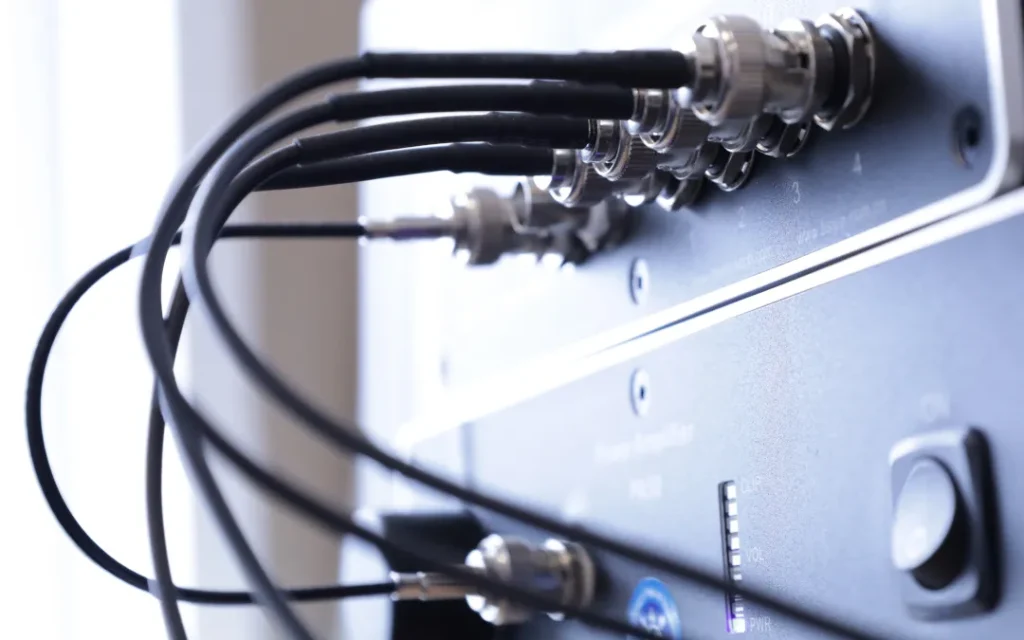
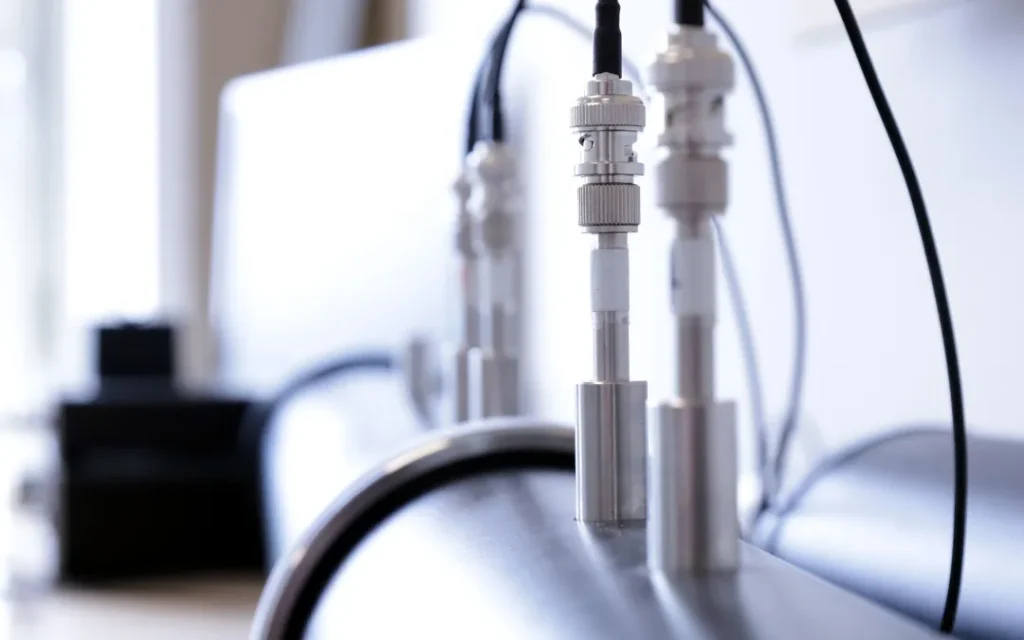
Measurement Principle
The impedance tube (Kundt’s tube) method is based on generating a sound wave inside a tube with the sample mounted at one end.
The incident sound wave interacts with the material, where it is partially absorbed and reflected. By analyzing the resulting sound pressure distribution along the tube, acoustic properties can be determined.
This includes:
- Sound absorption coefficient
- Acoustic impedance
- Reflection characteristics
- Transmission loss
Test Setups
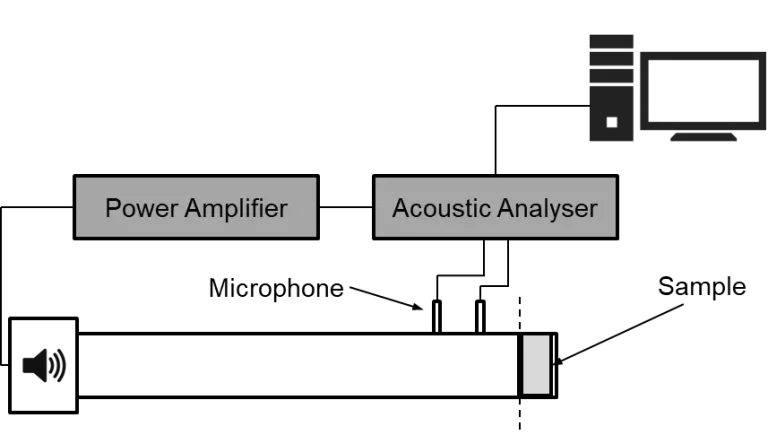
Two microphone setup
- According to DIN EN ISO 10534-2 and ASTM E1050
- For absorption, reflection and impedance measurements
Four microphone setup
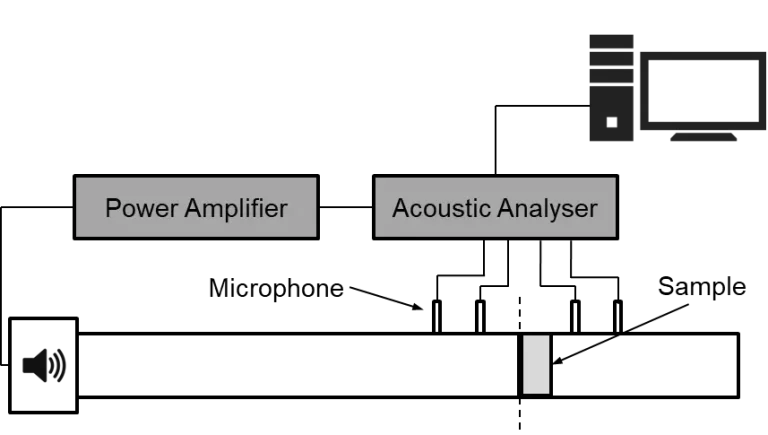
- According to ASTM E2611
- For transmission loss measurements
Frequency Range
Different tube diameters are used to cover a wide frequency range:
- 100 mm tube: 63 Hz – 1800 Hz
- 60 mm tube: 125 Hz – 3150 Hz
- 30 mm tube: 1000 Hz – 6300 Hz
Sample Configuration
Samples are mounted in a dedicated holder within the tube.
Typical characteristics:
- Circular samples matching tube diameter
- Flat material specimens
- Coatings, foams, and structured surfaces
The method is particularly suited for small-scale material samples and layered systems.
Measurement & Evaluation
Acoustic properties are determined using transfer function analysis of the measured pressure signals.
This enables:
- Quantitative evaluation of absorption performance
- Comparison between different materials and configurations
- Identification of frequency-dependent behavior
Test Efficiency
Impedance tube measurements are highly efficient and reproducible.
Key advantages include:
- Short setup and measurement times
- Standardized test procedures
- Direct comparability between samples
This makes the method suitable for material screening and characterization.
Typical Use Cases
Acoustic analysis is used for:
- Evaluation of sound absorption properties of materials
- Comparison of different surface treatments or coatings
- Characterization of layered or porous structures
- Geometric optimizations tied to acoustic properties within materials
Frequently Asked Questions
What types of materials can be tested?
Flat material samples such as coatings, foams, acoustic and thermal insulation materials, layered systems, and structured surfaces that can be mounted in the tube. With specialized holders even loose, bulk material can be tested in the impedance tube.
What sample sizes are required?
Samples must match the inner diameter of the impedance tube (e.g. 30 mm, 60 mm, or 100 mm). The sample thickness can go up to 100 mm
Which acoustic properties can be measured?
Sound absorption, reflection, impedance, and transmission loss depending on the selected setup.
How long does a measurement take?
Measurements are typically fast due to standardized procedures and require only short setup times.
Is the method suitable for comparative studies?
Yes, the impedance tube method is highly reproducible and well-suited for direct comparison between materials.